What to Expect in the First 24-72 Hours
Immediately after an extraction, a blood clot forms in the socket — this clot is the foundation of healing, protecting the underlying bone and nerve endings while new tissue develops. It is completely normal to experience some swelling, mild bleeding (oozing), and soreness during this window.
Pain and swelling typically peak within the first 24 to 72 hours and then begin to ease gradually. Many patients notice the most discomfort on the second day, followed by steady improvement through the rest of the week. Some stiffness in the jaw and mild bruising on the cheek are also common and resolve on their own.
Home-Care Do's for Faster, Smoother Healing
- Cold compress — apply an ice pack wrapped in cloth to the outside of the cheek for 15-20 minutes at a time during the first day to help control swelling.
- Soft food — stick to soft, cool or lukewarm foods like yogurt, mashed potatoes, khichdi or soup for the first couple of days, chewing away from the extraction site.
- Gentle rinsing after 24 hours — once the clot has stabilized, a gentle warm salt-water rinse a few times a day helps keep the area clean without disturbing healing.
- Rest and elevate — keeping your head slightly elevated while resting can reduce throbbing and swelling.
- Follow your dentist's specific instructions — every extraction is different, and your dentist's after-care advice takes priority over general guidance.
Home-Care Don'ts: Protecting the Blood Clot
The single biggest risk in the days after an extraction is dislodging the blood clot, which can lead to a painful condition called dry socket where the underlying bone is exposed. To protect the clot:
- Avoid drinking through a straw — the suction can pull the clot loose.
- Avoid smoking, which both creates suction and slows healing.
- Avoid vigorous rinsing, spitting, or swishing forcefully, especially in the first 24 hours.
- Avoid hot foods and drinks immediately after the procedure, and skip hard, crunchy or sticky foods until your dentist advises it's safe.
- Avoid touching or probing the socket with your tongue, fingers, or a toothbrush bristle.
How Prescribed Anti-Inflammatory Tablets Support Recovery
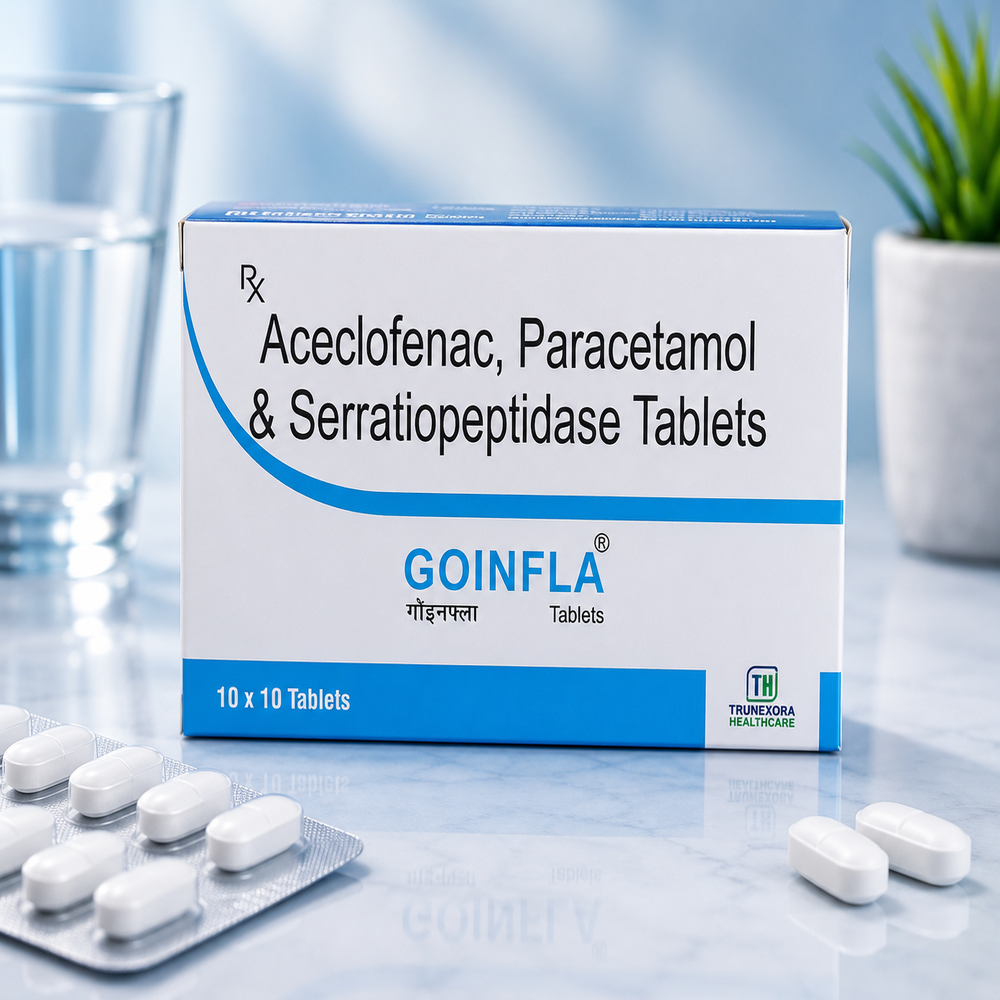
Alongside these home-care steps, dentists commonly prescribe an anti-inflammatory and analgesic tablet to keep pain and swelling manageable while the socket heals. GOINFLA® Tablet, a combination of Aceclofenac, Paracetamol and Serratiopeptidase, is one such option — the anti-inflammatory component helps reduce swelling and tissue inflammation at the extraction site, while the analgesic component addresses the pain signals themselves.
This combined action is why such tablets are frequently recommended after extractions and similar oral procedures — but always as prescribed by your dentist, at the dose, frequency and duration they advise, and typically taken after food to minimize any stomach discomfort.
When Pain or Swelling Is Abnormal
A gradual, steady improvement is the expected pattern. It's time to contact your dentist for a follow-up if you notice:
- Pain that gets worse instead of better after the third day.
- Swelling that continues to increase rather than subside.
- Persistent or heavy bleeding that doesn't settle with gentle pressure.
- Fever, or a foul taste/odor coming from the socket.
- Visible bone in the socket or a sudden increase in pain a few days in — possible signs of dry socket.
These signs warrant a prompt dental review rather than waiting it out at home.
Buy GOINFLA® Tablet in Bhubaneswar & Odisha
Trunexora Healthcare is headquartered in Laxmisagar, Bhubaneswar, Odisha, and supplies GOINFLA® Tablet to pharmacies, dental clinics and retail partners across Bhubaneswar, Cuttack, Puri and the rest of Odisha. It is available at partner pharmacies with a valid prescription, to be taken exactly as prescribed by your dentist. Dental practitioners and distributors can reach our team directly for bulk orders and clinic supply.