When Do Dentists Actually Prescribe Antibiotics?
A dental infection is not automatically an "antibiotics situation." Many common problems — a simple cavity, a chipped tooth, mild gum bleeding from brushing too hard — are mechanical or localized problems best solved with a filling, cleaning, or minor procedure. Antibiotics do nothing to repair a cavity or reverse decay; they only act against bacteria that have invaded tissue beyond what a filling can reach.
Dentists generally reserve antibiotics for situations where there is clear evidence of a spreading or systemic bacterial infection: a dental abscess with swelling extending into the face or jaw, fever, difficulty opening the mouth, infection following an extraction that isn't resolving with drainage alone, or in patients with certain medical conditions where even a localized infection carries higher risk. In many straightforward cases, the dental procedure itself — draining an abscess, cleaning out an infected root canal, or extracting a badly damaged tooth — resolves the problem without any antibiotic being necessary.
Why Combination Antibiotics Are Often the Preferred Choice
The mouth hosts a highly mixed population of bacteria, some of which have evolved defenses against common antibiotics. A number of these bacteria produce an enzyme called beta-lactamase, which can break down and inactivate plain amoxicillin before it has a chance to work.
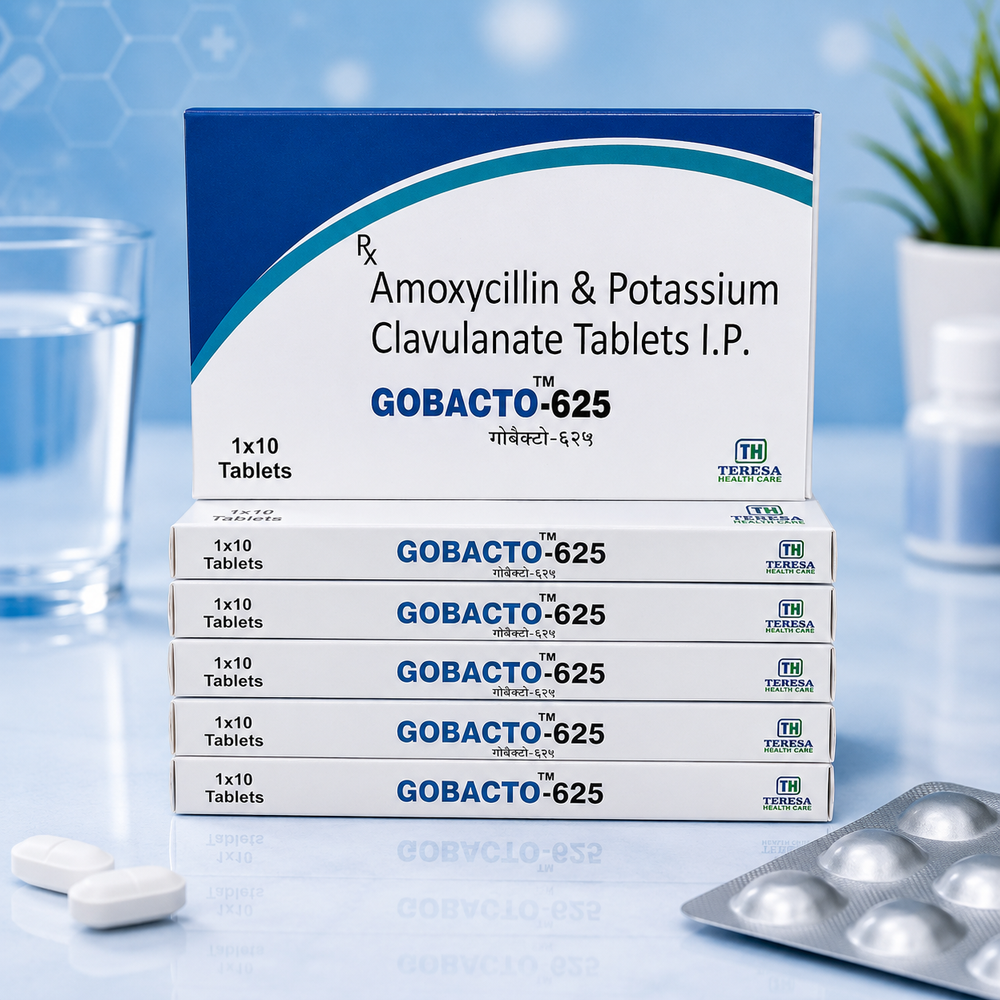
This is where combination antibiotics come in. GOBACTO™-625 Tablet pairs Amoxicillin with Clavulanic Acid, a beta-lactamase inhibitor. The clavulanic acid component doesn't fight bacteria on its own — instead, it disables the enzyme that would otherwise neutralize the amoxicillin, allowing the antibiotic to reach and act on a broader range of bacteria, including many resistant strains that plain amoxicillin alone would struggle against.
This is precisely why dentists often reach for a combination antibiotic when the infection looks more complex or when a first-line option has already failed — it widens the net of bacteria the medicine can effectively treat.
Completing the Full Course: Why It's Non-Negotiable
One of the most common mistakes patients make is stopping an antibiotic as soon as the pain and swelling ease up, usually within a couple of days. At that point, the infection is often only partially cleared — the most vulnerable bacteria have died off, but hardier ones may still be present in smaller numbers.
- Stopping early allows surviving bacteria to regroup, and the infection can flare back up, sometimes worse than before.
- Incomplete courses give bacteria repeated exposure to a dose that doesn't fully eliminate them — a key driver of antibiotic resistance, both for the individual patient and at a population level.
- Always take the full course, on schedule, for the full number of days prescribed by your dentist or physician — even after you feel completely fine.
Antibiotic Resistance: A Shared Responsibility
Antibiotic resistance is one of the most pressing challenges in modern medicine, and dentistry is not exempt from it. Every unnecessary antibiotic prescription, every incomplete course, and every instance of self-medication with leftover tablets contributes to bacteria adapting and becoming harder to treat.
This is why responsible antibiotic use matters: only taking antibiotics when a qualified professional has prescribed them, for the exact condition they were prescribed for, at the exact dose and duration advised — never sharing tablets with a family member who has "similar" symptoms, and never keeping leftover antibiotics for future self-treatment.
Never Self-Medicate for a Dental Infection
It can be tempting to buy an antibiotic based on a previous prescription or a friend's recommendation when a toothache flares up. This carries real risks — the wrong antibiotic may not target the actual bacteria involved, may mask worsening infection while doing little to treat it, or may interact with other medications and health conditions a dentist would otherwise account for.
GOBACTO™-625 Tablet, like all antibiotics, is a prescription-only medicine. It should only be used exactly as directed by a qualified dentist or physician after they have assessed the infection, not as a first response to any dental pain.
Buy GOBACTO™-625 Tablet in Bhubaneswar & Odisha
Trunexora Healthcare is headquartered in Laxmisagar, Bhubaneswar, Odisha, and supplies GOBACTO™-625 Tablet to pharmacies, dental clinics and retail partners across Bhubaneswar, Cuttack, Puri and the rest of Odisha. It is available at partner pharmacies with a valid prescription from your dentist or physician. Dental practitioners, pharmacies and distributors can reach our team directly for bulk orders and clinic supply.