Around Age 2: Caring for First Teeth
By around age 2, most toddlers have a good number of their primary (baby) teeth in place. Even though these teeth are temporary, cavities in them can cause pain, affect eating and speech, and even impact the position of permanent teeth developing underneath. At this stage:
- Brush twice daily with a soft, small-headed toothbrush and a rice-grain smear of a low-fluoride, child-specific gel.
- An adult should always do the brushing at this age, gently covering every surface, including the back molars.
- Avoid putting toddlers to bed with a bottle of milk or juice, which pools sugar around the teeth overnight.
- Schedule the first dental visit around this age, or as soon as the first tooth erupts, to establish a baseline and get comfortable with checkups early.
Around Age 6: Supervised Brushing and the First Permanent Molars
Around age 6, most children start losing baby teeth and their first permanent molars begin to erupt at the back of the mouth — often without any baby tooth being lost first, which can catch parents by surprise. This is also the age when children start attempting to brush on their own, though their coordination usually isn't fully reliable yet.
Stay Involved
Let your child hold the brush, then follow up yourself to make sure all surfaces are covered, especially new back molars.
Time It
Use a two-minute timer or song so brushing duration becomes a habit rather than a guess.
Right Formula
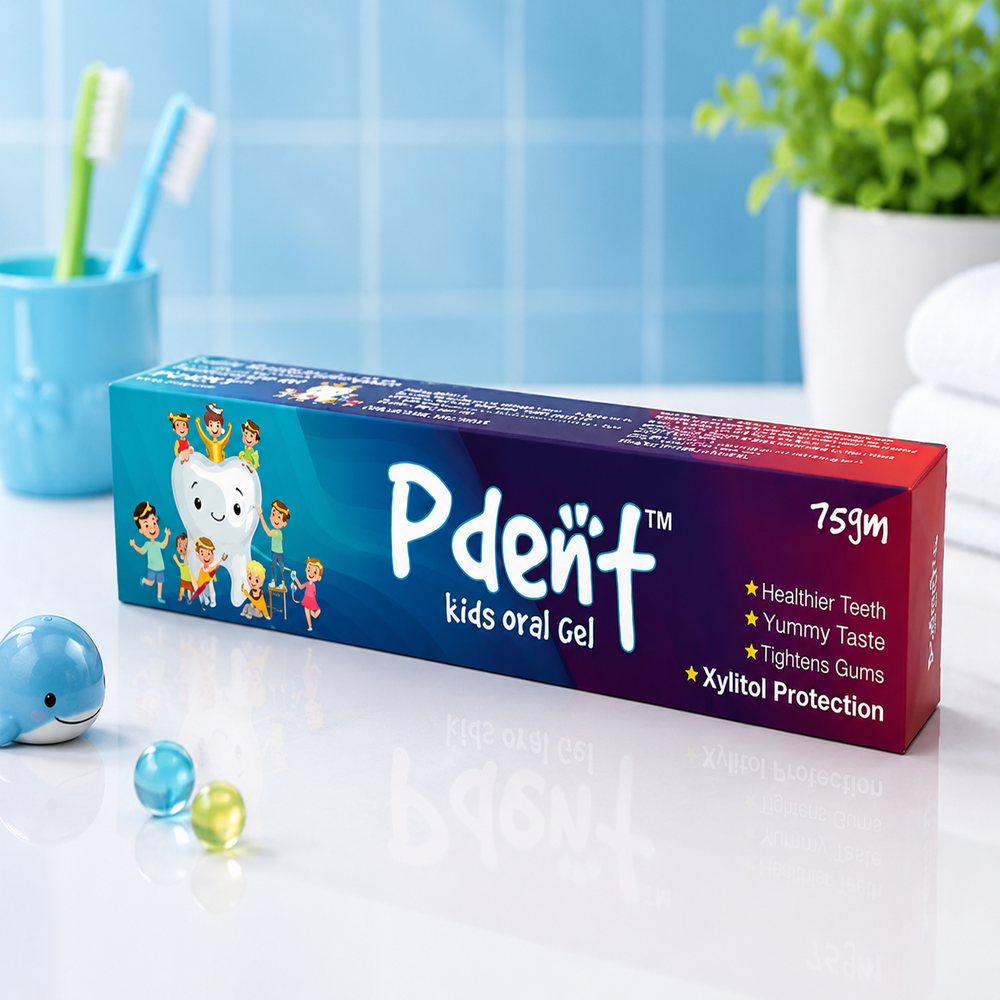
A gentle oral gel formulated for kids helps make the twice-daily habit comfortable rather than a chore.
Regular Checkups
Six-monthly dental visits catch early issues with new permanent molars before they progress.
Around Age 12: Independent Brushing and Lifelong Habits
By the preteen years, most children have the dexterity and understanding to brush and floss fully on their own. The parenting job shifts from doing the brushing to reinforcing consistency — twice a day, two minutes each time — and helping them understand why it matters, especially as permanent teeth finish coming in and habits set for adulthood.
- Encourage flossing once daily as permanent teeth close in next to each other.
- Talk openly about diet — frequent sugary snacks and fizzy drinks are a common cause of new cavities in this age group.
- Keep dental checkups on the calendar even once brushing is independent; peer pressure and busy schedules are common reasons teens start skipping.
Making Brushing a Habit That Sticks
Across every age, the biggest factor in long-term oral health isn't a single product — it's consistency. A few things that help:
- Keep the routine predictable: same times, same steps, every day.
- Let younger children pick their own brush design to build a sense of ownership.
- Model the habit yourself — children are more likely to brush properly if they see parents doing it too.
- Praise the effort and consistency rather than focusing only on results.
Buy PDENT® Kids Oral Gel in Bhubaneswar & Odisha
Trunexora Healthcare is headquartered in Laxmisagar, Bhubaneswar, Odisha, and PDENT® Kids Oral Gel is supplied to pharmacies, dental clinics and retail partners across Bhubaneswar, Cuttack, Puri and the rest of Odisha. Parents looking for a gentle, age-appropriate oral gel for their children, and dental practitioners or distributors seeking bulk supply, can reach our team directly.