Recognising the Signs of Teething
Teething typically begins around 6 months of age, though it can start earlier or later depending on the child. The signs are usually mild but can be uncomfortable for babies who don't yet have the words to explain what's bothering them. Common signs include:
- Increased drooling — often more noticeable than usual, sometimes leading to a mild rash around the chin.
- Gum swelling or tenderness — the gums may look slightly red or puffy where a tooth is about to emerge.
- Irritability and fussiness — particularly in the evenings or during naps.
- Chewing on fingers, toys or anything within reach — the pressure can offer some relief from the discomfort.
- Disrupted sleep — teething discomfort often peaks at night when there are fewer distractions.
A mild rise in fussiness is common, but a high fever, diarrhoea or a rash spreading beyond the chin is not typically caused by teething alone and is worth checking with a pediatrician.
Safe Ways to Soothe Teething Discomfort
Gentle Gum Massage
A clean finger, gently rubbed over the gums, provides counter-pressure that many babies find comforting.
Chilled (Not Frozen) Teethers
A clean, chilled teething ring gives safe chewing relief; avoid anything frozen solid, which can be too hard on developing gums.
Keep Drool Managed
Wiping the chin regularly helps prevent the mild skin irritation that comes with excess drooling.
Ask Your Pediatrician
For persistent discomfort, your child's doctor can advise on safe options appropriate for their age and weight.
When Should Oral Care Routines Begin?
Oral care doesn't need to wait for teeth to appear. Even before the first tooth erupts, gently wiping a baby's gums with a clean, damp cloth after feeds helps clear away milk residue and gets the child used to having their mouth touched — which makes the transition to brushing much smoother later.
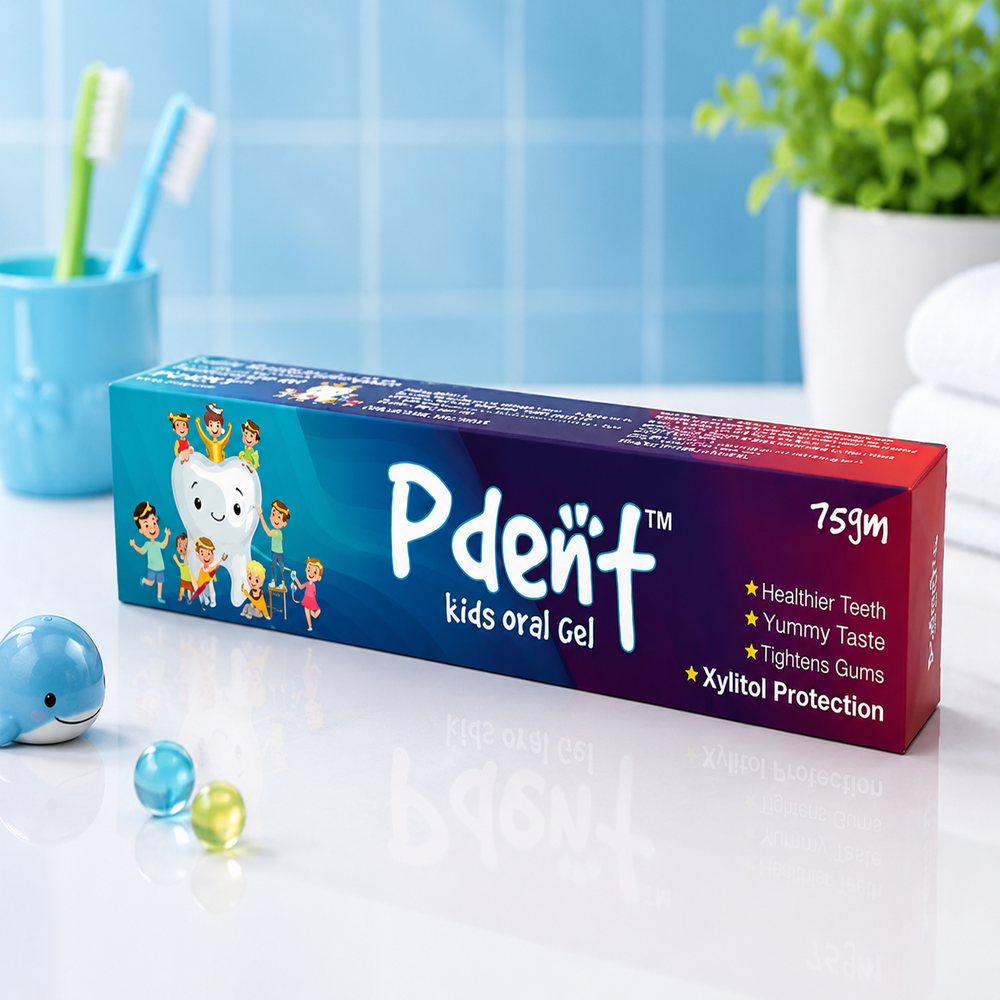
Once the first tooth breaks through, this is the point to introduce a soft-bristled infant toothbrush and a rice-grain smear of a low-fluoride, child-specific oral gel, used gently twice a day under adult supervision.
Transitioning From Teething Care to Regular Brushing
As more teeth come in through the toddler years, the routine naturally expands:
- Move from gum-wiping to a full, gentle brushing session covering every tooth, twice daily.
- Increase toothpaste gel to a pea-sized amount once the child reliably learns to spit rather than swallow.
- Keep sessions short, calm and consistent — a predictable routine helps toddlers accept brushing rather than resist it.
- Schedule the first dental visit by the time the first tooth appears, or by their first birthday, to establish a baseline early.
Buy PDENT® Kids Oral Gel in Bhubaneswar & Odisha
Trunexora Healthcare is headquartered in Laxmisagar, Bhubaneswar, Odisha, and PDENT® Kids Oral Gel is supplied to pharmacies, dental clinics and retail partners across Bhubaneswar, Cuttack, Puri and the rest of Odisha. Parents looking for a gentle oral gel suited to young children, and dental practitioners or distributors seeking bulk supply, can reach our team directly.