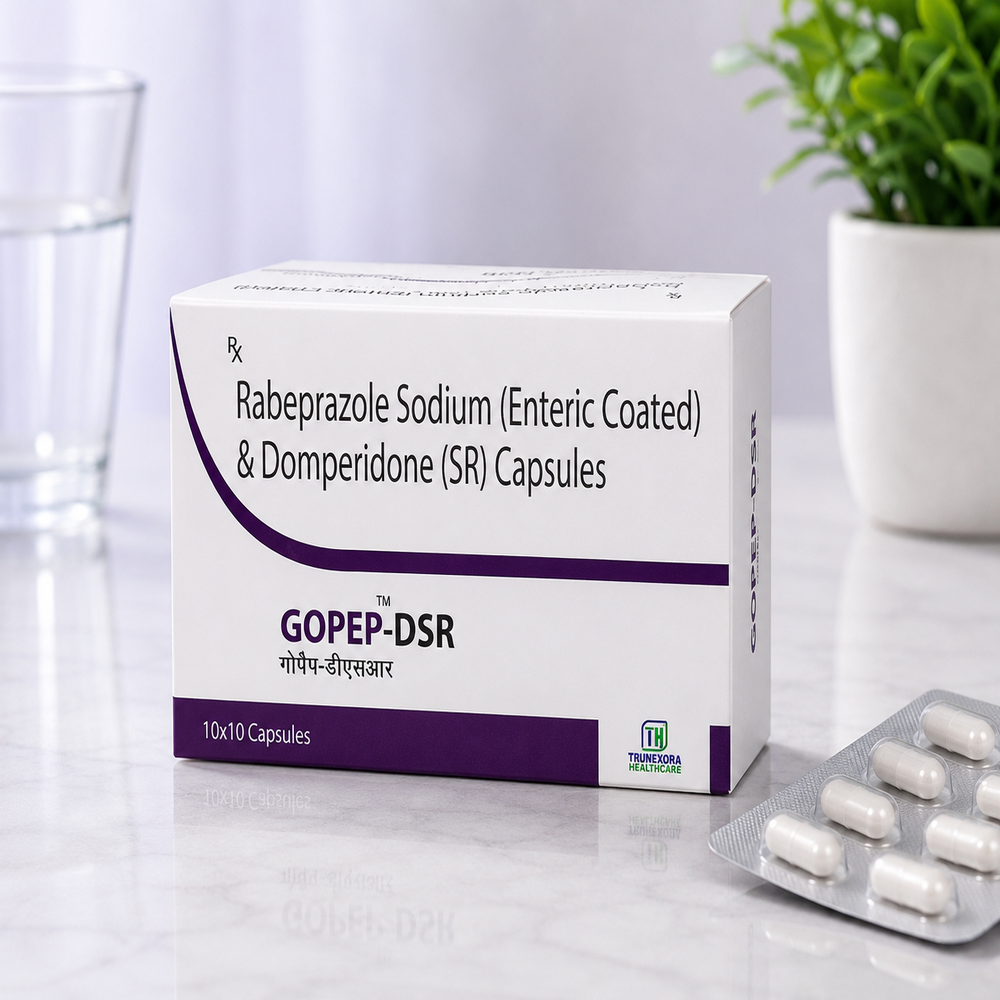
Why Timing Matters for Acid-Reducing Medication
Proton pump inhibitors (PPIs), the class of medicine most commonly used for acidity, GERD and peptic ulcer disease, don't neutralise acid that already exists in the stomach. Instead, they block the pumps in the stomach lining responsible for producing acid — and those pumps are most active shortly after you start eating.
This is why doctors typically advise taking a PPI-based capsule 30 to 60 minutes before a meal, on an empty stomach. Taken at this time, the medicine is absorbed and reaches active levels in the bloodstream right as the acid-producing pumps switch on for the meal — allowing it to block a much larger share of them. Taken with or after food, the same medicine is far less effective, because many of the pumps have already started producing acid.
Building a Consistent Daily Routine
Consistency is just as important as the timing itself. A steady routine helps maintain even acid control throughout the day and makes it easier to remember your dose. A few practical habits:
- Take your capsule at the same time each day, ideally 30–60 minutes before breakfast, as advised by your physician.
- Swallow the capsule whole with a glass of water — do not chew, crush or open it, as this can affect how the medicine is released in the body.
- Keep the medication somewhere visible near your morning routine (like next to your toothbrush or on the breakfast table) as a reminder.
- Avoid taking it right before rushing out — allow the recommended gap before eating so absorption isn't interrupted.
- If your physician has prescribed a different schedule for your specific condition, always follow their instructions over general guidance.
What Happens If You Miss a Dose
Missing an occasional dose is common and usually not a cause for alarm, but how you handle it matters:
- Do not double the next dose to "catch up." Taking two doses at once does not restore lost benefit and may increase the chance of side effects.
- Take your next dose at its normal scheduled time, following the same empty-stomach timing as usual.
- If you miss doses frequently, or are unsure what to do after a missed dose, contact your doctor or pharmacist — they can advise based on your specific prescription and condition.
Don't Stop a Prescribed Course Early
It's tempting to stop medication as soon as symptoms improve, but acidity and GERD treatment is usually prescribed for a specific duration for good reason — stopping early can allow inflammation in the food pipe to persist even after the burning sensation fades, and symptoms often return. Duration of therapy depends on your physician's recommendation, and you should not self-medicate long-term or discontinue treatment without medical advice, even when you are feeling better.
If you experience side effects, or feel the medication isn't working as expected, speak with your doctor rather than adjusting the dose or stopping on your own.
Available in Bhubaneswar & Odisha
Trunexora Healthcare is headquartered in Laxmisagar, Bhubaneswar, Odisha, and supplies GOPEP™ DSR to pharmacies, clinics and retail partners across Bhubaneswar, Cuttack, Puri and the rest of Odisha. Speak with your physician about the right dosing schedule for your condition before starting or changing any medication.