What Causes Acidity and Acid Reflux
At the base of the food pipe (oesophagus) sits a ring of muscle called the lower oesophageal sphincter (LES). Its job is to open when food passes into the stomach and then close tightly to keep stomach acid where it belongs. When the LES weakens or relaxes at the wrong time, acid escapes upward into the oesophagus — causing the burning sensation known as acidity or heartburn.
Several everyday factors make this more likely:
- Diet — spicy, oily, and fried foods, excess caffeine, carbonated drinks, citrus, tomato-based dishes, chocolate and alcohol are common triggers.
- Meal timing and size — large meals, eating too quickly, or eating late at night close to bedtime increase reflux risk.
- Obesity — excess abdominal weight raises pressure on the stomach, pushing acid upward more easily.
- Smoking — nicotine relaxes the LES and reduces saliva, which normally helps neutralise acid.
- Certain medications — some painkillers and other drugs can irritate the stomach lining or worsen reflux; always mention your acidity history to your doctor before starting new medication.
- Stress and irregular routines — these do not directly cause acid production but often worsen how symptoms are perceived and managed.
Common Symptoms of Acidity and GERD
Occasional acidity happens to almost everyone. GERD (gastroesophageal reflux disease) is the term used when reflux becomes frequent — generally more than twice a week — or starts damaging the oesophageal lining. Watch for:
Heartburn
A burning sensation rising from the chest toward the throat, often worse after meals or when lying down.
Regurgitation
A sour or bitter taste as stomach contents rise back into the mouth or throat.
Bloating
A feeling of fullness, gas, or discomfort in the upper abdomen after eating.
Other Signs
Chronic cough, hoarseness, sore throat or a sensation of a lump in the throat can also be reflux-related.
Lifestyle Modifications That Genuinely Help
Before or alongside any medication, these habit changes reduce how often and how severely acid reflux strikes:
- Eat smaller, more frequent meals instead of two or three large ones.
- Avoid lying down or reclining for at least two to three hours after eating.
- Elevate the head of the bed, or use an extra pillow, to keep stomach acid from travelling upward while sleeping.
- Identify and reduce your personal trigger foods — these vary from person to person.
- Maintain a healthy body weight to reduce abdominal pressure.
- Cut back on smoking and alcohol, both of which weaken the LES.
- Avoid tight-fitting clothing around the waist, which can push acid upward.
- Eat dinner earlier in the evening rather than close to bedtime.
How Gastroprotective Capsules Help — Under Medical Guidance
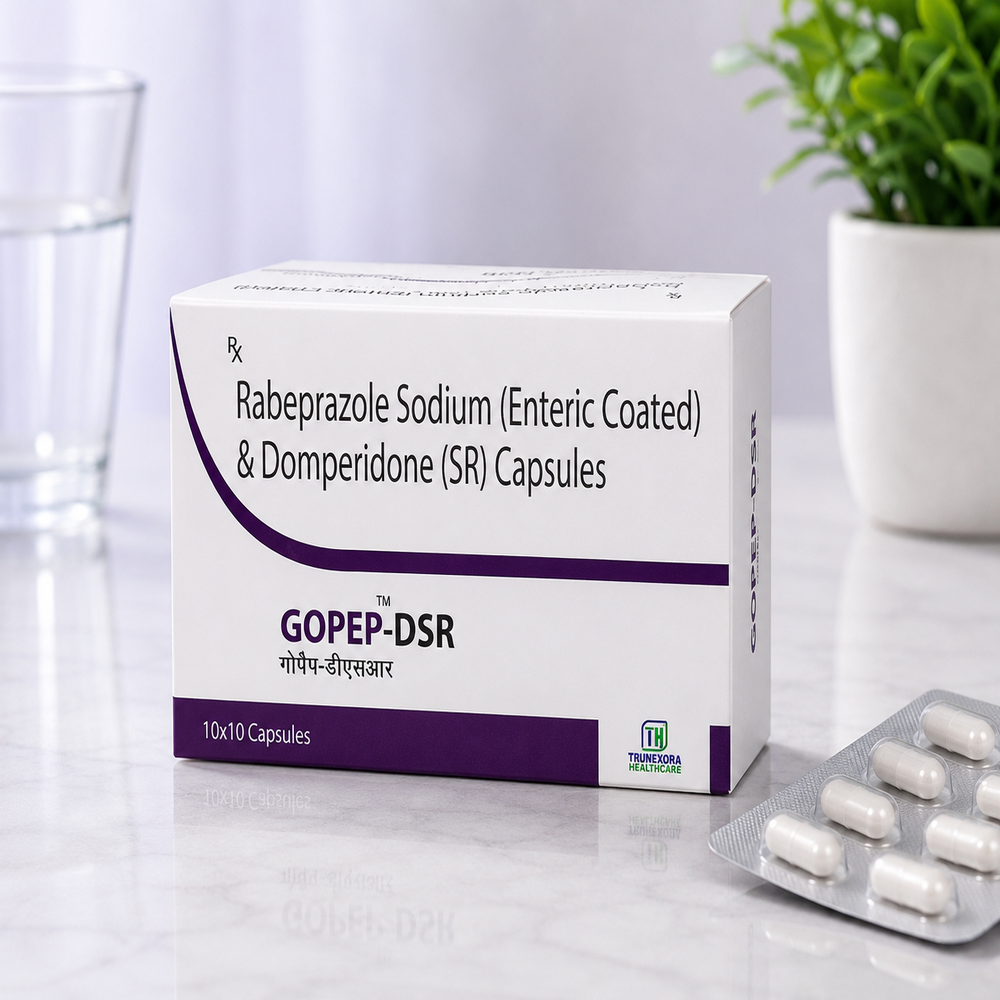
When lifestyle changes alone are not enough, doctors often prescribe a gastroprotective capsule that combines a proton pump inhibitor (PPI) with a prokinetic agent. The PPI component reduces the amount of acid the stomach produces, while the prokinetic component helps the stomach empty more efficiently and eases associated bloating and nausea. This combined action, as used in formulations like GOPEP™ DSR, is designed to address both the acid load and the sluggish digestion that often accompany reflux.
Such medication works best as part of a plan supervised by a physician — the right dose, the right timing relative to meals, and the right duration of therapy all depend on your specific condition. Duration of therapy depends on your physician's recommendation, and you should not self-medicate long-term without medical advice, even if a course has previously helped you.
When to See a Doctor
Occasional, mild heartburn after a heavy meal is usually not a cause for concern. However, you should consult a physician promptly if you notice:
- Heartburn or acid reflux occurring more than twice a week.
- Symptoms that no longer respond to previously effective measures.
- Unintended weight loss alongside digestive symptoms.
- Difficulty or pain while swallowing food or liquids.
- Persistent vomiting, or vomiting blood.
- Black, tarry, or bloody stools.
These "alarm symptoms" require timely medical evaluation rather than continued self-management, as they can sometimes point to conditions beyond simple acid reflux.
Available in Bhubaneswar & Odisha
Trunexora Healthcare is headquartered in Laxmisagar, Bhubaneswar, Odisha, and supplies gastroprotective formulations such as GOPEP™ DSR to pharmacies, clinics and retail partners across Bhubaneswar, Cuttack, Puri and the rest of Odisha. If you are experiencing frequent acidity or reflux symptoms, consult your physician for a proper diagnosis and prescription before starting any medication.