What Actually Causes Persistent Bad Breath
In the vast majority of cases, chronic bad breath originates in the mouth itself, not the stomach. Oral bacteria break down proteins from food debris, dead cells and saliva, releasing volatile sulphur compounds that produce the characteristic odour. A few specific sources are responsible for most cases:
- Bacterial coating on the tongue — the rough surface of the tongue, especially toward the back, traps bacteria and debris that a toothbrush alone often misses.
- Gum disease — inflamed or infected gum tissue harbours bacteria that produce a persistent, distinct odour, and is one of the most common causes of long-term halitosis.
- Dry mouth — saliva naturally washes away food particles and bacteria; when saliva flow drops (from mouth breathing, certain medications, or dehydration), odour-causing bacteria multiply faster.
- Diet — foods like garlic, onion and certain spices contain compounds absorbed into the bloodstream and released through the breath as they're digested.
- Poor oral hygiene — infrequent or rushed brushing and flossing allow plaque and trapped food to build up between teeth and along the gumline.
Less commonly, persistent bad breath can be linked to sinus infections, tonsil stones, acid reflux or other underlying medical conditions — which is why breath that doesn't improve with good oral hygiene is worth discussing with a professional.
A Practical Daily Routine That Fixes Most Cases
Brush Thoroughly
Twice daily for two minutes, paying attention to the gumline where plaque accumulates.
Clean the Tongue
Use a tongue scraper or the back of your toothbrush daily to remove the bacterial coating.
Floss Daily
Removes trapped food and plaque from between teeth that brushing alone cannot reach.
Stay Hydrated
Drinking water regularly keeps saliva flowing and helps naturally rinse away bacteria.
Combined consistently, these four habits resolve the majority of everyday bad breath within a couple of weeks.
When an Antibacterial Rinse Helps
An antibacterial mouthwash adds a layer of protection that brushing and flossing alone can't fully achieve, particularly for bacteria on the tongue's surface and in hard-to-reach pockets around the gums. Rinsing after brushing (or at a different time of day, as directed) helps keep the bacterial count down between meals and through the day. This is especially useful for people who notice odour returning quickly after brushing, or who have early gum inflammation contributing to the problem.
A rinse is a helpful addition to the routine above — it is not a substitute for brushing, flossing or tongue cleaning, and it will not resolve bad breath caused by an underlying medical condition.
When to See a Dentist or Doctor
Most bad breath responds well to the routine above within one to two weeks. It's time to seek professional advice if:
- Bad breath persists despite consistent brushing, flossing and tongue cleaning for two or more weeks.
- You notice bleeding, swollen or receding gums alongside the odour.
- Breath odour has a sudden, unusual quality (metallic, fruity or ammonia-like), which can occasionally point to a medical cause worth checking with a doctor.
- You experience persistent dry mouth, sinus symptoms or digestive discomfort alongside the breath issue.
A dentist can identify whether gum disease, tooth decay or another oral cause is responsible and recommend the right next step.
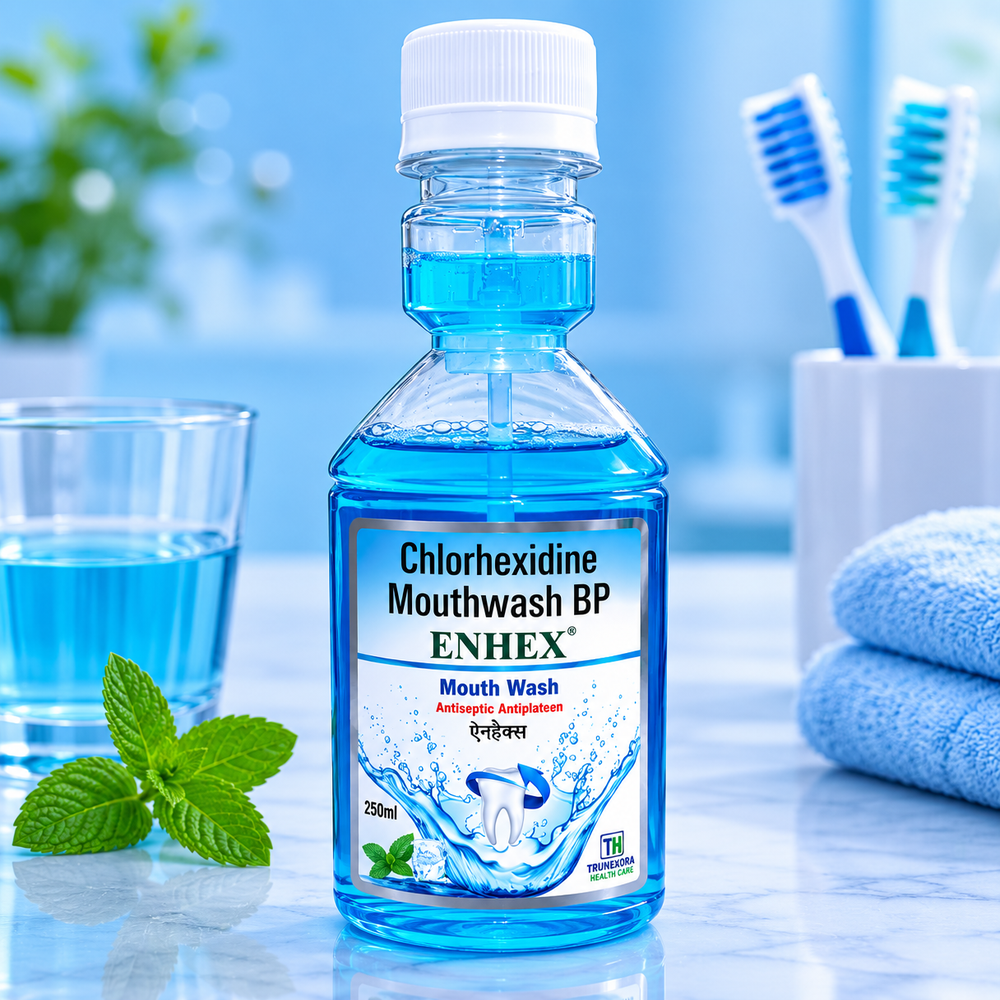
Buy ENHEX® Mouthwash in Bhubaneswar & Odisha
Trunexora Healthcare is headquartered in Laxmisagar, Bhubaneswar, Odisha, and ENHEX® Mouthwash is supplied to pharmacies, dental clinics and retail partners across Bhubaneswar, Cuttack, Puri and the rest of Odisha. Dental practitioners and distributors can reach our team directly for bulk orders and clinic supply.