Early Signs of Gingivitis
Gingivitis is the earliest, mildest stage of gum disease and is caused by a build-up of plaque bacteria along the gumline. Because it typically causes little to no pain, it's easy to overlook — but the visible signs are usually there if you know what to look for:
- Bleeding gums — noticing blood while brushing or flossing, even without obvious pressure, is the most common early sign.
- Redness — healthy gums are typically a firm, pale pink; inflamed gums often appear darker red or purplish.
- Swelling — puffy, tender gum tissue that looks slightly enlarged around the base of the teeth.
- Mild bad breath — a persistent stale odour that doesn't fully go away with brushing.
The encouraging news is that gingivitis is generally reversible. With improved brushing and flossing technique and a professional cleaning, gum tissue at this stage typically returns to health within a few weeks.
Signs of Advanced Periodontitis
If gingivitis is left untreated, the inflammation can spread below the gumline and begin to affect the bone and connective tissue that anchor the teeth in place. At this stage, called periodontitis, the signs become more serious and structural:
Gum Recession
Gums pull away from the teeth, making teeth appear longer and exposing sensitive root surfaces.
Loose Teeth
As supporting bone is lost, teeth can feel less stable or begin to shift position.
Persistent Bad Breath
A stronger, more constant odour driven by bacteria deep in the gum pockets.
Pus or Deep Pockets
Visible discharge or noticeably deeper spaces between teeth and gums.
Unlike gingivitis, the bone loss associated with periodontitis is not fully reversible — treatment focuses on stopping further progression and protecting the teeth that remain.
Why Early Intervention Matters
The gap between gingivitis and periodontitis is where the real opportunity lies. Addressing bleeding or swollen gums as soon as they appear — rather than waiting for pain, which often shows up much later — is what keeps gum disease reversible. Once bone loss begins, the goal shifts from "cure" to "control," which usually means more intensive and ongoing treatment. Regular dental check-ups are valuable precisely because a dentist can spot early gingivitis before you notice symptoms yourself.
Professional Cleaning Plus Targeted Home Care
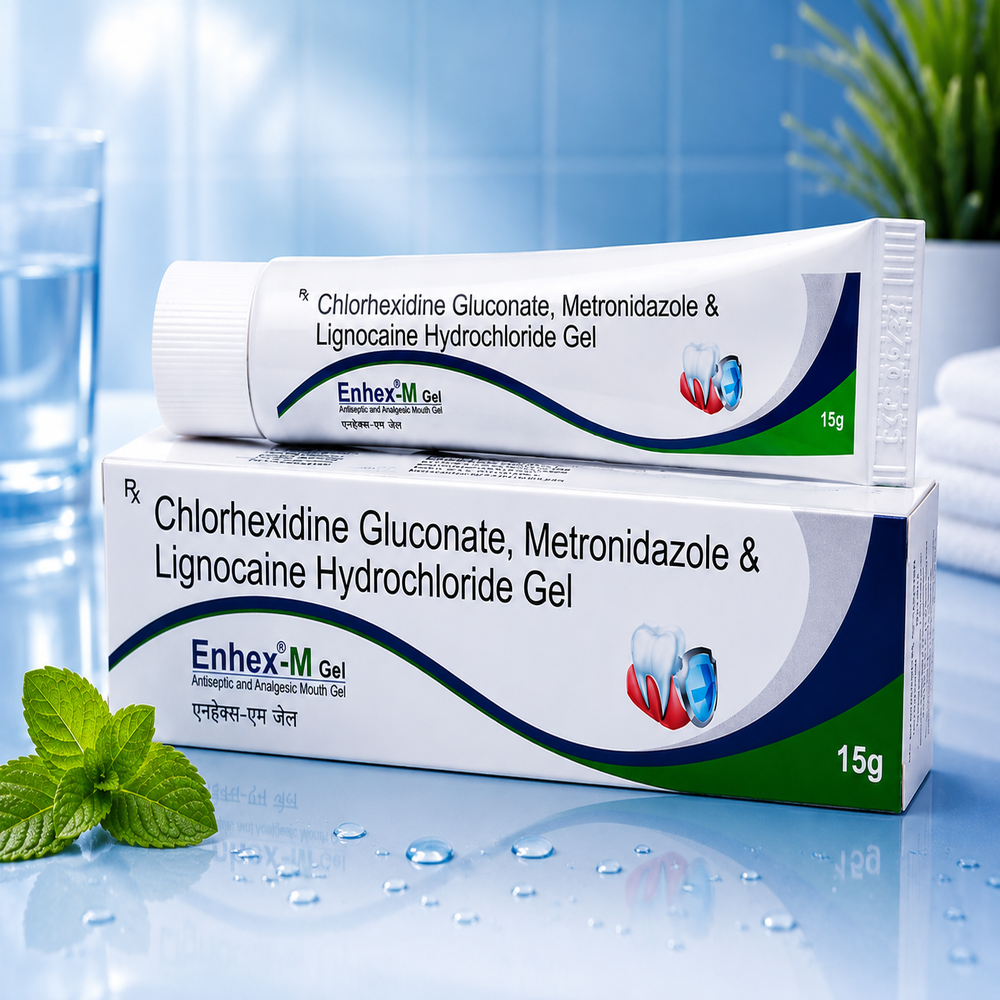
Professional cleaning (scaling) removes hardened plaque, known as tartar or calculus, that a toothbrush cannot reach — this is an essential step that home care alone cannot replace. Alongside professional treatment, a targeted antimicrobial gel like ENHEX®-M Gel, applied to the gumline, can help manage bacterial activity in the gum tissue between visits, supporting the healing process as part of a complete daily routine of brushing, flossing and gentle gum massage.
Prevention
- Brush twice daily for two full minutes, angling the brush gently toward the gumline.
- Floss once a day to clear plaque from between teeth before it hardens into tartar.
- Visit your dentist every six months for a check-up and professional cleaning.
- Avoid tobacco use, which significantly increases the risk and severity of gum disease.
- Address bleeding gums as soon as you notice them, rather than waiting for the problem to resolve on its own.
Buy ENHEX®-M Gel in Bhubaneswar & Odisha
Trunexora Healthcare is headquartered in Laxmisagar, Bhubaneswar, Odisha, and ENHEX®-M Gel is supplied to pharmacies, dental clinics and retail partners across Bhubaneswar, Cuttack, Puri and the rest of Odisha. Dental practitioners and distributors can reach our team directly for bulk orders and clinic supply.